How to lower ecommerce payment processing fees
You can lower your ecommerce transaction fees by moving away from flat-rate pricing, negotiating processor markups, and routing transactions through cheaper local payment channels like direct bank payments. While card processing costs typically range from 1.5% to 3.5% of each transaction, you can reduce this burden without hurting your checkout conversion rate. Many merchants worry that modifying payment flows will frustrate buyers, but offering optimised local options actually boosts sales while driving down costs.
The anatomy of payment fees
Every time a customer purchases a product on your online store, the transaction fee you pay is split among three distinct entities. Understanding this breakdown is the first step toward reducing your monthly bills.
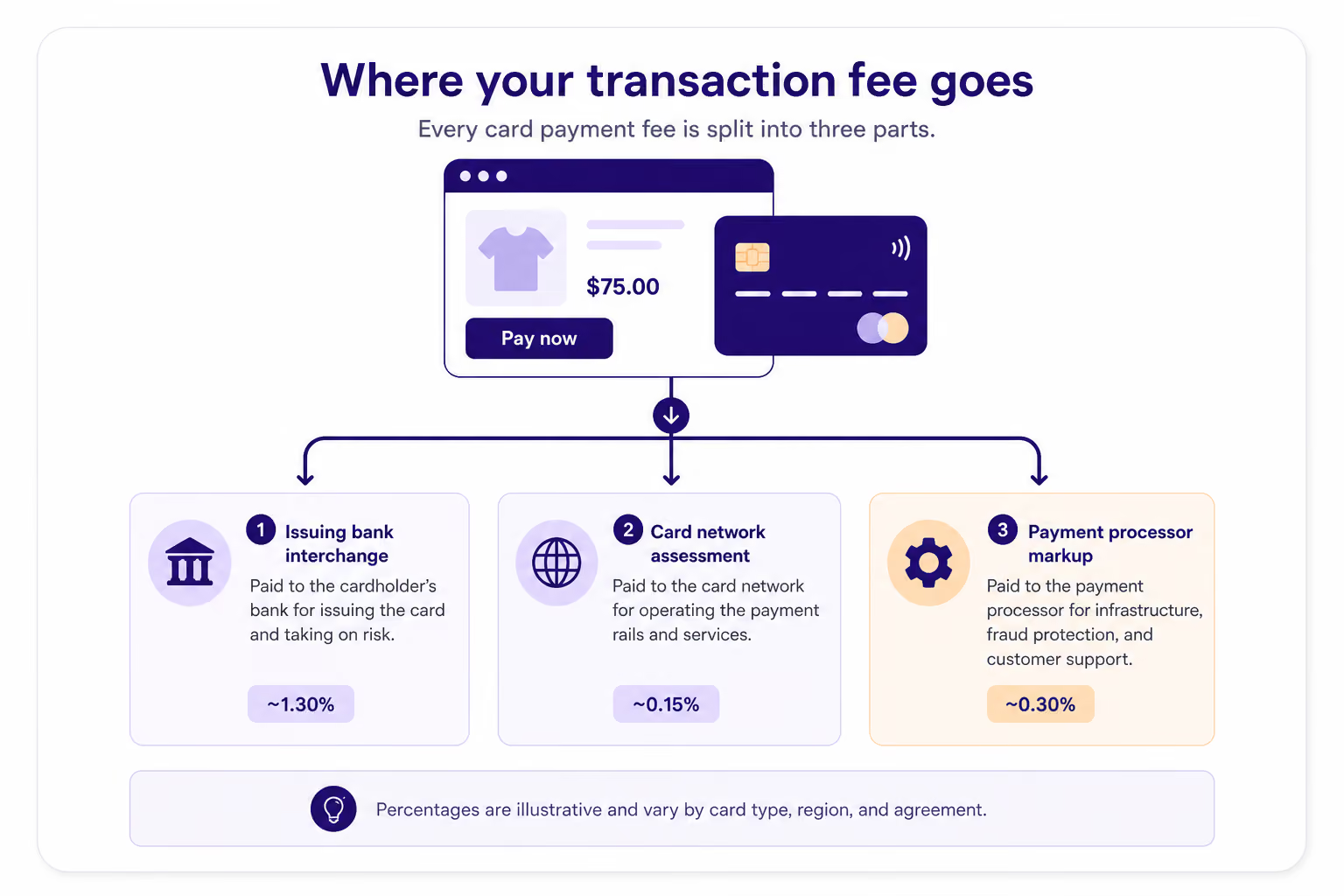
The card-issuing bank receives the interchange fee, which represents the largest portion of your transaction costs. These rates are set directly by the card networks, as detailed in the official Visa interchange reimbursement fees schedule and the Mastercard US region interchange programs. Card networks also claim a fixed assessment fee. Because both of these components are non-negotiable for merchants, your focus should remain on the processor markup, which is the only negotiable part of the bill.
Some merchants select flat-rate pricing models because they provide predictable fees. However, this simplicity often masks the true, lower cost of processing transactions. For businesses processing more than €10,000 monthly, an interchange-plus model is far more economical. This structure passes through the actual card network fees and applies a transparent, separate markup. Recognizing how these fees interact is a key step when picking an ecommerce payment provider for your store.
Strategies to negotiate your processor markup
Processors want to retain high-volume, low-risk clients. You can use your transaction history as leverage to secure better rates during negotiations.
- Conduct a thorough audit of your payment statements. Gather three to six months of processing history to isolate variable markups from fixed costs.
- Highlight your low-risk business metrics. Presenting a record of stable volumes and low dispute rates makes you highly attractive to providers.
- Request the removal of unnecessary operational fees. Target nonprocessing overheads such as PCI non-compliance charges and monthly account minimums.
- Propose a tiered fee structure based on volume. Ask for automatic markup reductions as your monthly transaction volume passes specific commercial milestones.
Because standard chargeback fees range from $15 to $50 per dispute, maintaining a low dispute rate directly strengthens your negotiating position.
Optimising interchange to prevent costly downgrades
When transactions fail to meet strict security or data standards, card networks downgrade them into higher-cost interchange categories. For example, standard card-not-present rates apply to clean online sales, but missing verification data can trigger standard downgrades that dramatically increase costs.

- Implement Address Verification Service (AVS) checks. Verifying the customer's billing address helps secure lower interchange tiers for card-not-present transactions.
- Collect complete cardholder details at checkout. Requiring the card verification value (CVV) and expiration dates reduces risk and helps transactions qualify for lower rates.
- Settle your transaction batches within twenty-four hours. Processing and clearing transactions promptly prevents authorisations from expiring and causing expensive downgrades.
- Transmit enhanced Level II and Level III data for business clients. Sending corporate customer details and tax information can reduce commercial card interchange costs by 0.45% to 0.60%.
While credit cards are a global solution, understanding why card payments are still important in ecommerce helps you balance reach with cost efficiency.
Diversifying your checkout with local payment methods
A common concern among merchants is that restricting payment options will cause customers to abandon their carts. However, you do not need to rely solely on expensive card networks to provide a smooth checkout.
In markets across Poland and the Baltics, customers frequently prefer local payment methods over credit cards. Direct bank transfers, powered by open banking, and systems like BLIK in Poland offer instant settlement and bypass card networks entirely. These account-to-account payments carry a fraction of the cost of standard credit cards.

By integrating alternative payment channels alongside card options, you can naturally steer customers toward lower-cost methods. Knowing how a payment gateway works and handles transactions clarifies how choosing alternative checkout channels can bypass legacy card networks and keep your revenue intact.
Leveraging modern payment integrations
Montonio provides an all-in-one payment and shipping platform designed to reduce transaction fees while boosting conversions. Instead of managing multiple contracts and paying separate gateways, you can run your entire checkout through a single integration.
- Consolidate multiple payment options into a single gateway. You can accept direct bank payments, cards, Google Pay, Apple Pay, and BLIK without managing separate contracts.
- Offer interest-free financing and Pay Later options. Providing flexible Pay Later choices is completely free for merchants while allowing you to receive the full amount upfront.
- Install pre-built modules for major platforms. You can integrate our services instantly if you use specialised platforms like Shopify, WooCommerce, or PrestaShop.
For example, businesses using our plugin on Shopify enjoy an incredibly competitive transaction rate of just 0.79% plus 0.10€ per transaction. This lets you scale your business without worrying about escalating payment overheads.
Reducing payment acceptance fees is possible without compromising the customer experience. By auditing your statements, securing your transaction data to prevent downgrades, and integrating local bank payments alongside credit cards, you can reclaim your margins.
Discover how Montonio's ecommerce payment solutions can help you cut transaction costs and streamline your checkout.