How to sell online in Latvia: A guide for growth
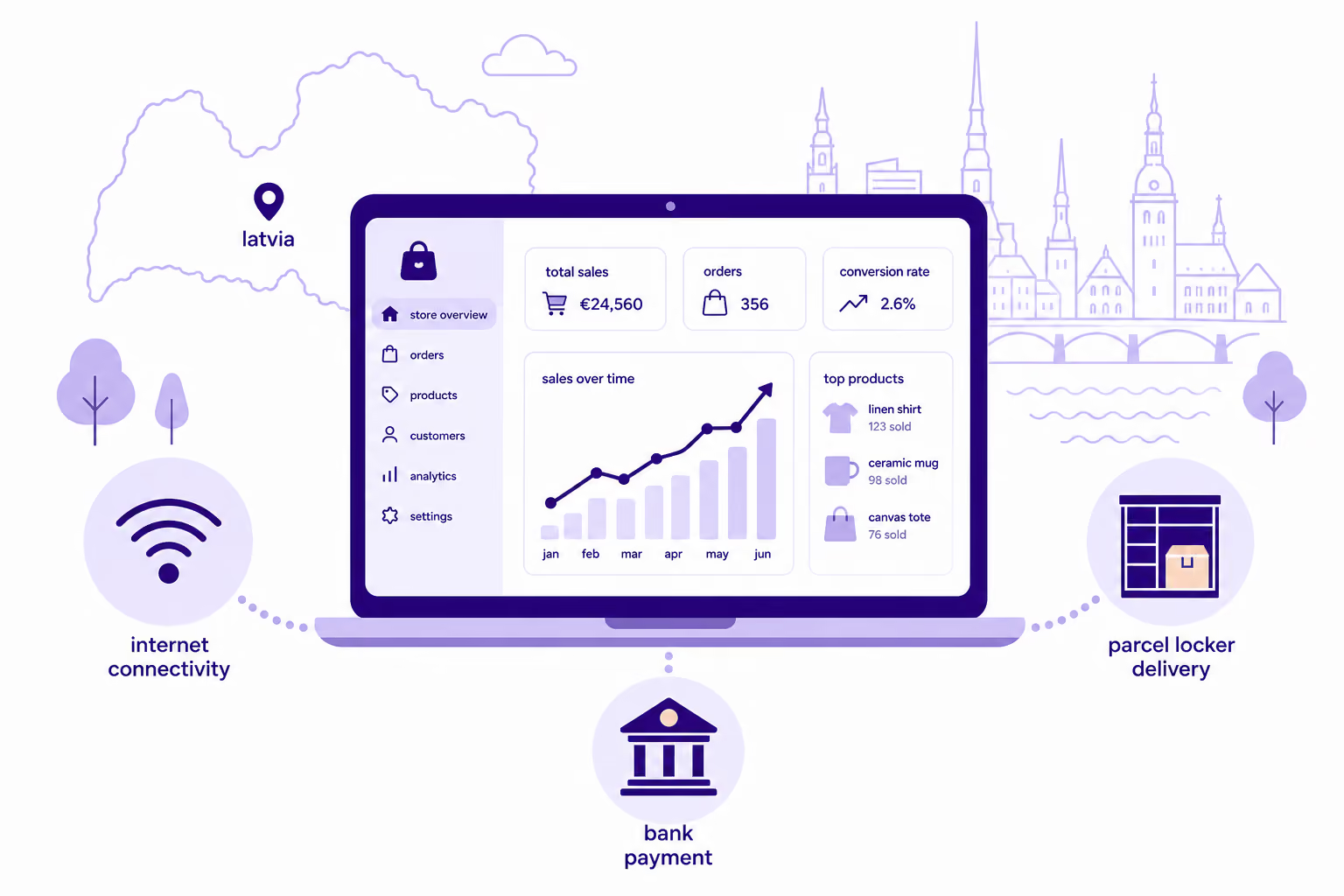
Latvia offers a sophisticated digital landscape where over 90% of the adult population uses the internet. To succeed here, you must prioritise local delivery preferences – specifically parcel lockers – and provide seamless bank payments. While the market size is smaller than Western European nations, the 11% annual growth in online sales revenue makes it a high-potential region for merchants expanding in the Baltics. High internet penetration and a tech-savvy population in the Riga region, where over 75% of residents shop online, create a stable foundation for ecommerce.
Choosing an ecommerce platform for the Latvian market
Your choice of platform dictates how easily you can integrate local shipping and payment providers. While custom-built solutions offer total control, most successful merchants in Latvia use scalable platforms that balance customisation with ease of use.
- Shopify is a hosted solution that manages security and updates for you. It is ideal if you want to go live quickly and prefer a user-friendly interface. You can use specific Shopify integrations to connect local Baltic payment methods and shipping carriers directly to your store.
- WooCommerce is a flexible, open-source plugin for WordPress. It requires more hands-on management but offers deeper customisation. Many Latvian merchants prefer this for its cost-effectiveness and the ability to use a dedicated checkout plugin to handle payments and shipping in one place.
Before committing, you should evaluate the best ecommerce platform for your store based on your technical skills, budget, and long-term scalability. Comparing Shopify and WooCommerce will help you determine which model aligns with your operational goals.
Local payment preferences and trends
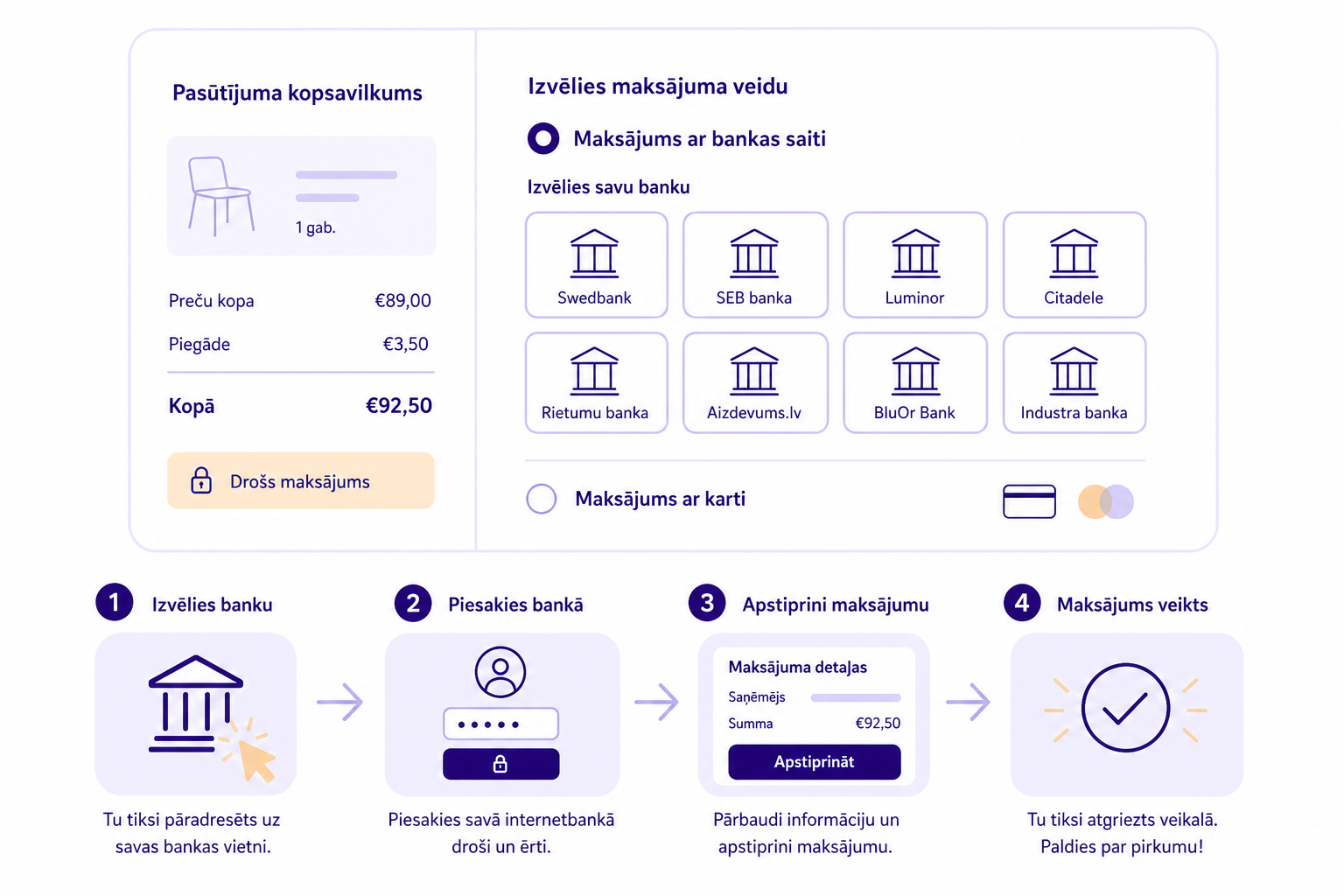
Latvian shoppers expect a variety of payment options at checkout. While credit and debit cards are standard, bank payments – which allow customers to pay directly via their online bank account – are highly popular and often preferred for their speed and security.
The rise of bank payments
Merchants should support all major local banks, including Swedbank, SEB, Citadele, and Luminor. Recent market entries like Indexo have also gained traction, meaning your payment gateway must stay updated with local banking shifts to avoid losing customers. When picking an ecommerce payment provider, ensure they provide a wide range of these local links through a single integration.
Buy now, pay later (BNPL)
Financing options are becoming a strategic tool for increasing average order value. Offering pay later options in Latvia allows customers to split payments into instalments or pay the full amount the following month. This is particularly effective for electronics, furniture, and high-end fashion, making high-value purchases more accessible to a broader audience.
Shipping and logistics: The dominance of parcel lockers
Shipping is often the deciding factor for Latvian consumers. Unlike many markets where home delivery is the default, parcel lockers are the most common shipping location for regular online shoppers in Latvia. To meet customer expectations, your shipping strategy should prioritise flexibility and transparency.
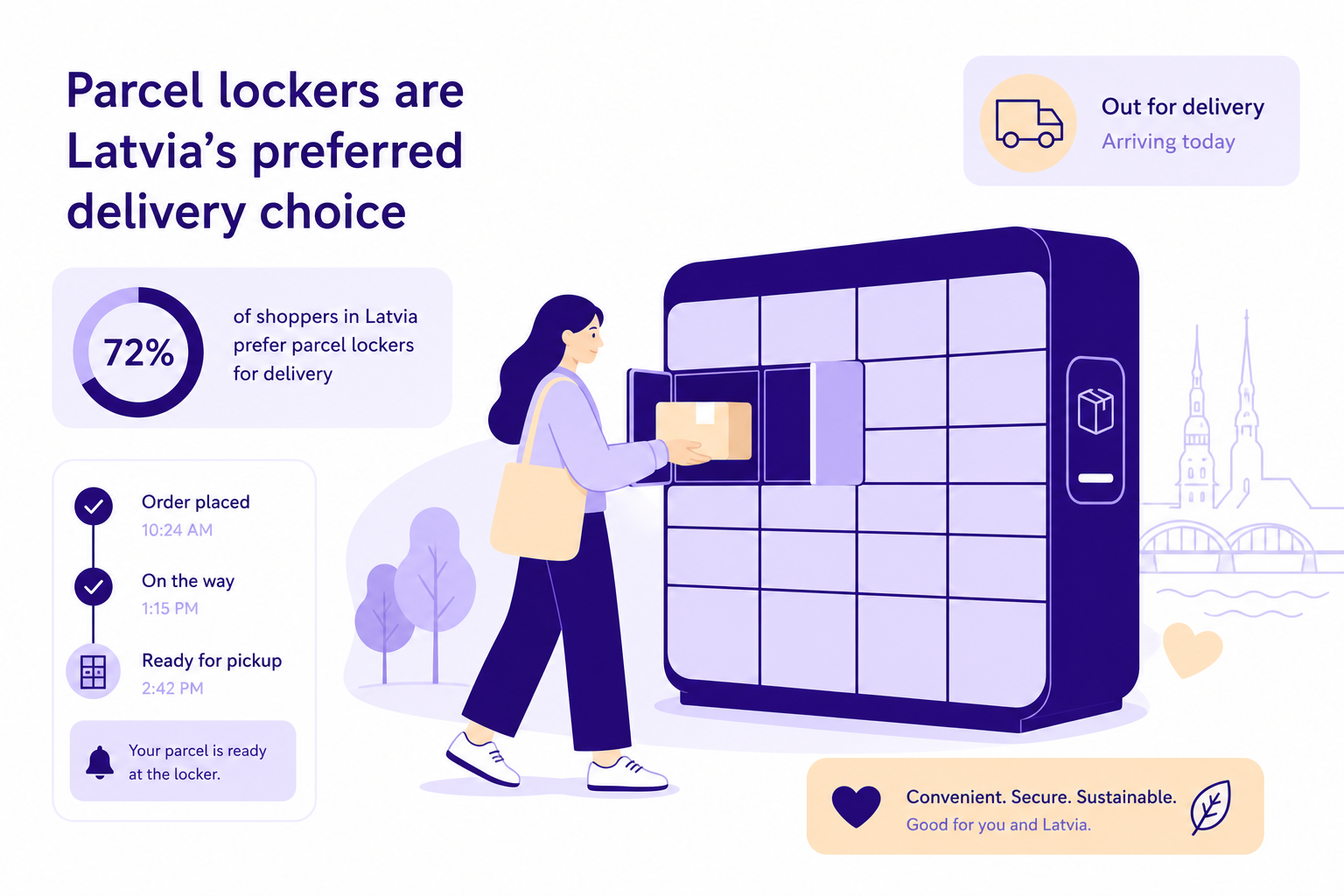
- Parcel locker network integration with providers like Omniva, DPD, and Venipak
- Clear pricing to account for shipping costs and avoid abandonment at the final checkout step
- Automated label generation to reduce manual errors and save administrative time
- Real-time tracking information to keep customers informed of their parcel’s journey
Navigating legal requirements and consumer rights
The Consumer Rights Protection Centre (PTAC) in Latvia strictly enforces ecommerce regulations. Transparency is the best way to avoid fines and build trust with a consumer base that values reliability.
Right of withdrawal
Under Latvian law, consumers have the right to withdraw from a distance contract within 14 days without providing a reason. As a merchant, you must reimburse all payments received from the consumer within 14 days of receiving the withdrawal notice. A clear, well-structured return policy acts as a marketing asset, giving buyers the confidence to complete their purchase.
Common compliance pitfalls
According to PTAC, the most frequent ecommerce issues involve:
- Unclear or hidden pricing information
- Incomplete details regarding the mandatory 14-day return period
- Restrictive conditions that hinder a customer’s ability to exercise withdrawal rights
Optimising for the Latvian consumer
To scale effectively, you must move beyond basic setup and address the nuances of the local market. This involves technical performance as well as cultural relevance.
Mobile-first design
Avoid the common ecommerce mistake of neglecting mobile optimisation. With a high percentage of Latvian shoppers browsing on smartphones, a clunky mobile checkout will lead to lost sales. Ensure your store is responsive and that payment methods are easy to navigate on smaller screens.
Localisation
While many Latvians are multilingual, providing a store in the Latvian language is essential for building long-term brand authority. This includes localising product descriptions and providing customer support in the local language. Localisation signals that your business is committed to the market, which can significantly improve conversion rates.
Strategic checkout
Checkout friction is a major barrier to conversion. Consider implementing a one-page checkout where customers can select their preferred bank and parcel locker without being redirected to multiple external sites. Streamlining this process makes it easier for customers to commit to a purchase and reduces the likelihood of cart abandonment.
To refine your operations in the Latvian market, you can explore how Montonio integrates payments and shipping into a single platform to help you lower fees and increase efficiency.