Selling online in Estonia: A guide to legal and logistical setup
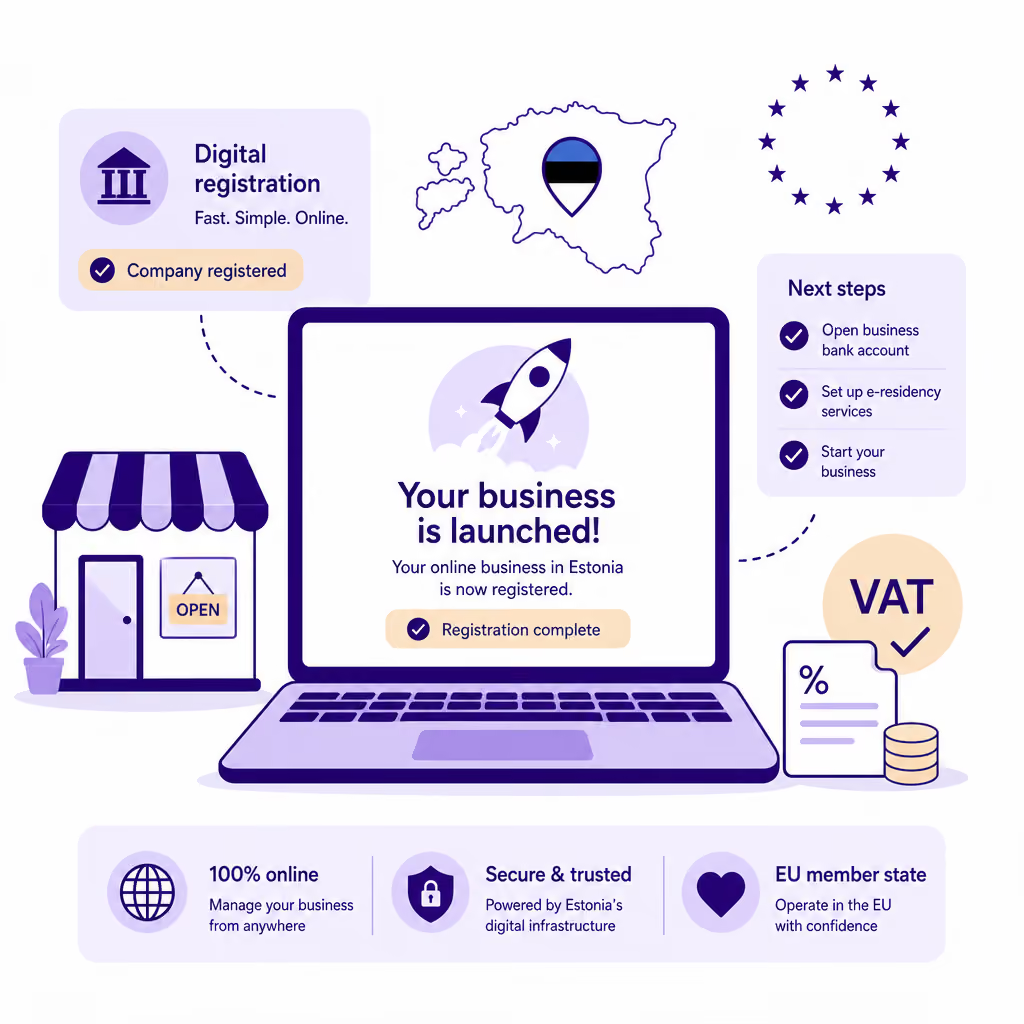
Estonia offers a digital-first environment that allows you to register an online business in hours and manage it from anywhere in the world. Its streamlined bureaucracy and tech-savvy population make it a unique hub for ecommerce growth in Northern Europe. To succeed, you need to navigate the transition from a local idea to a legally compliant, VAT-registered entity supported by a robust logistics network.
Choosing your business structure
The private limited company, known as an OÜ (osaühing), is the most common legal structure for ecommerce in Estonia. It provides limited liability, meaning your personal assets are protected from business debts. Setting up an OÜ is a straightforward process handled through the e-Business Register for a state fee of €265.
To set up an OÜ, you must meet these requirements:
- Register the company through the official digital portal.
- Appoint at least one shareholder and one board member.
- Maintain a legal address in Estonia and appoint a local contact person if you are a non-resident.
While e-Residency is not a mandatory requirement to sell in Estonia, it allows you to sign documents and manage your business remotely. This is particularly useful for founders who want to access the EU market without being physically present in the Baltics.
Navigating tax and VAT requirements
Understanding your tax obligations early prevents cash flow surprises. The Estonian Tax and Customs Board oversees compliance, and most filings are handled through their digital portal. Estonian companies must keep diligent accounting records and submit annual reports to remain in good standing.
VAT thresholds and rates
A resident business must register for Estonian VAT once its taxable turnover exceeds €40,000 in a calendar year. You have three business days to file your application once you cross this threshold.
- The standard VAT rate in Estonia is 24%.
- Reduced rates of 13% and 9% apply to specific categories such as books or certain medical goods.
- Returns are generally filed monthly and are due by the 20th of the following month.
If you plan to sell to customers across the EU, be aware of the €10,000 EU-wide threshold for distance sales. Once your total B2C sales to other EU countries exceed this amount, you must generally pay VAT in the customer's country. You can simplify this by using the One-Stop Shop (OSS) scheme, which allows you to report all EU-wide sales in a single return.
Selecting an ecommerce platform
Your choice of platform dictates how easily you can scale. When choosing the right ecommerce platform for your store, consider the total cost of ownership. Beyond the base subscription, factor in transaction fees, customisation costs, and the availability of local integrations.
Many Estonian merchants start with WooCommerce for its flexibility and control, while others prefer Shopify for its managed hosting and security. You can compare the strengths of different systems in our Shopify vs WooCommerce guide. Regardless of which you choose, ensure the platform supports easy ecommerce integrations for the specific payment and shipping tools used by Baltic consumers.
Setting up payments and checkout
Estonian consumers have specific payment preferences. While credit cards are used worldwide, local shoppers often prefer bank payments, which allow them to pay directly through their own bank's interface. To capture these sales, you need to understand how a payment gateway works as it encrypts customer data and communicates with banks to approve transactions.
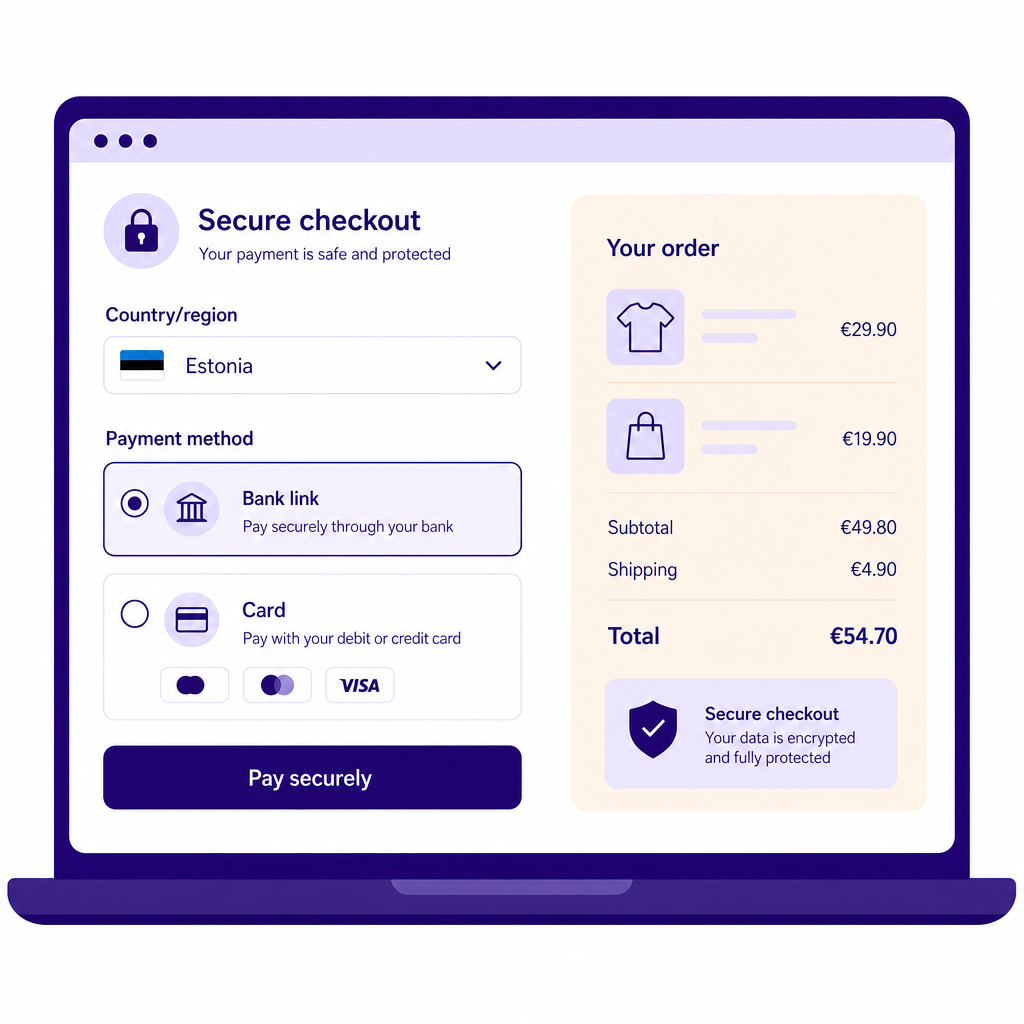
When picking an ecommerce payment provider, ensure they offer:
- Direct bank payments for all major Baltic banks.
- Card payment processing for Visa and Mastercard.
- Buy Now, Pay Later options to help increase average order values.
Using a comprehensive payment solution can reduce transaction fees and simplify your accounting by consolidating all your income into a single dashboard. This efficiency is critical when managing multiple payment methods simultaneously.
Managing logistics and shipping
Estonia has one of the highest densities of parcel machines in the world. Consumers expect the option to pick up their orders from a locker at their local shopping centre or petrol station. To manage this efficiently, you should optimise your shipping strategy to account for weight, dimensions, and delivery zones.
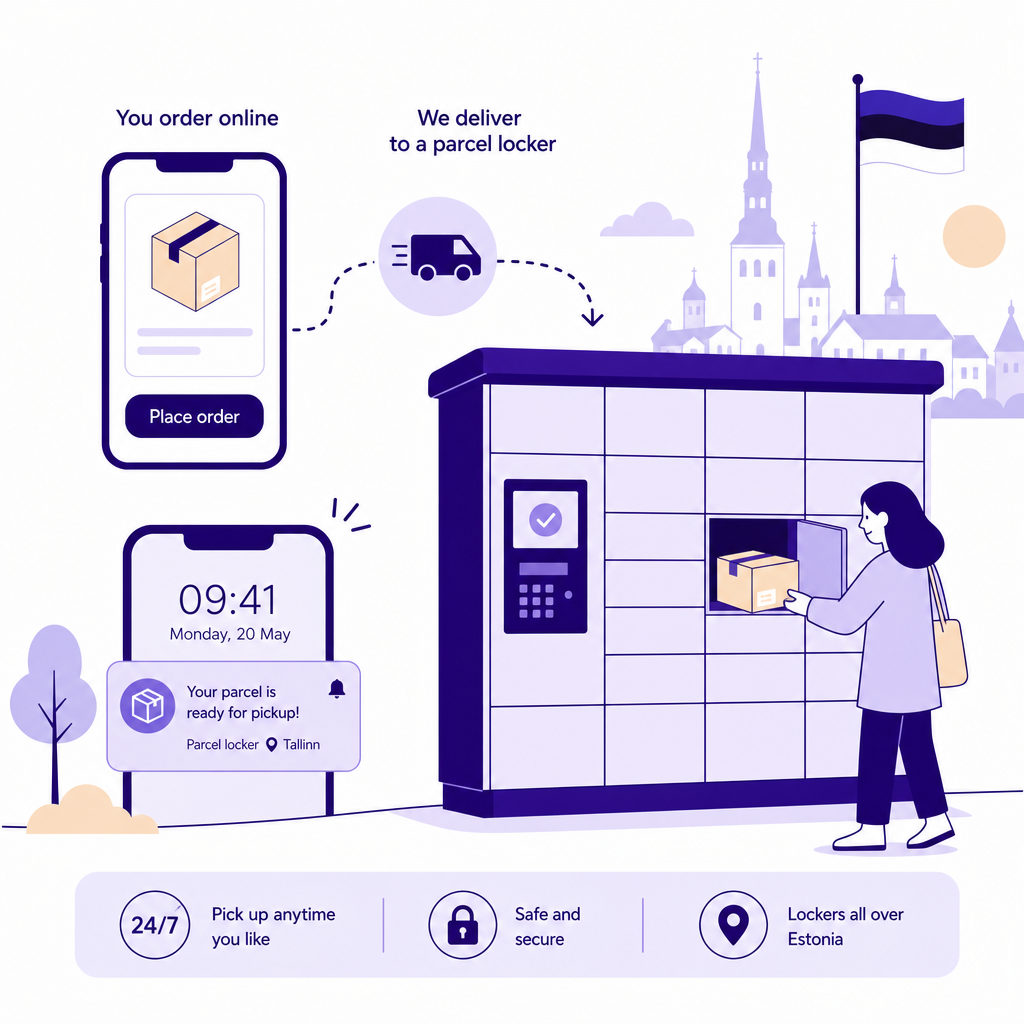
Managing separate contracts with every courier is time-consuming. Instead, many merchants use all-in-one shipping software to print labels for multiple carriers, such as Omniva, Smartposti, and DPD, from one place. As your business grows, you may want to look into expanding into international shipping to unlock new revenue streams beyond the Baltics. For many Estonian merchants, Finland is the natural next market, and you can offer Finnish shoppers MobilePay through the same Montonio setup.
If your business grows to more than 250 orders per month, you might consider outsourcing your ecommerce fulfilment to a professional warehouse. This allows you to focus on marketing while experts handle the picking, packing, and returns.
Consumer rights and returns
Estonian law is strict regarding consumer protection. Under EU rules, customers generally have a 14-day right of withdrawal for online purchases. They can return the goods without providing a reason, though there are exceptions for personalised items or unsealed digital content.
Once a customer notifies you of their intent to return an item, they have 14 days to send it back. You must then refund the payment within 14 days of receiving the goods or proof of return. Crafting a fair return policy is not just a legal requirement; it is a tool to build trust and encourage repeat purchases.
You should also ensure your store discloses:
- How discounts are calculated.
- Whether customer reviews are verified.
- Whether paid placement affects product rankings.
- Contact details and clear pricing including all taxes.
Running a store in Estonia allows you to benefit from a highly digitised economy and a straightforward tax system. By setting up a proper legal foundation and choosing the right tech stack, you can build a business that is ready for both local and international growth. If you are ready to start selling, you can set up your payments and shipping with Montonio to give your customers the checkout experience they expect.