Lithuania's biggest shopping moment isn't a sale. It's a pension reform.
In June 2025, the Lithuanian Government passed a pension reform that would give participants more control over their savings. From January 2026, Lithuanians can withdraw their second-pillar pension savings for the first time. According to Inrento, around 1.4 million people have money in the system, with total funds exceeding €9 billion. The Bank of Lithuania estimates that if 40–60% of savers exit, up to €3.4 billion could be withdrawn.
A meaningful share of that money will find its way into online stores. Here's what you need to know, and do.
How it played out in Estonia
Estonia ran a similar reform in 2021. When the payments landed, Montonio's data across more than a thousand Estonian online stores told a clear story. Compared to the previous week, ecommerce turnover jumped 50% in a single week. Transaction count was up 20%, and average order values rose by around 25% – meaning people weren't just buying more often, they were spending more per purchase.
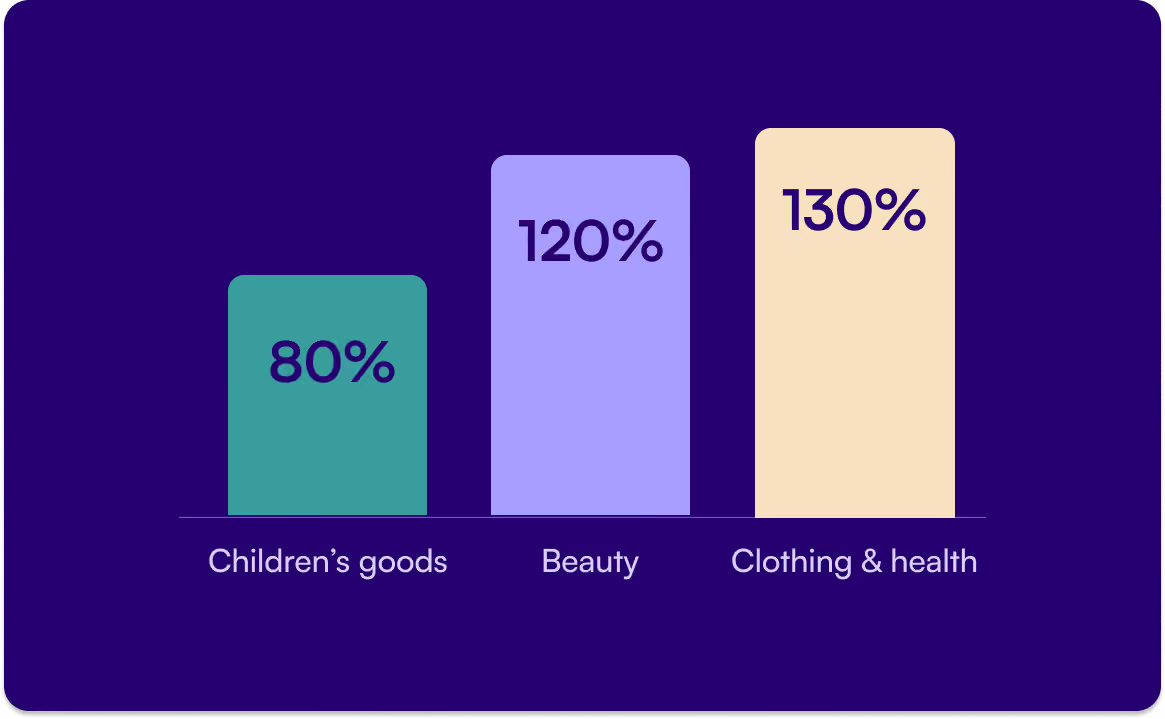
Some categories saw dramatic spikes week-on-week: clothing and health products were up 130%, beauty up 120%, and children's goods up 80%.
People had money they weren't expecting, so they spent it, and a big part of it, online.
What's happening in Lithuania
Lithuania is looking to go through a very similar event.
From 1 January 2026 to 31 December 2027, Lithuanians can request to withdraw either a part of the full amount from their second pillar. Unlike Estonia, there's no single payout moment – but that doesn't mean the money trickles in slowly either. Applications are collected quarterly, with payments going out within the first two weeks of the following quarter. So rather than one big spike, expect a rhythm of quarterly boosts throughout 2026 and 2027.
Everyone who applied in Q1 – January through March – will see the money hit their accounts in the first two weeks of April.
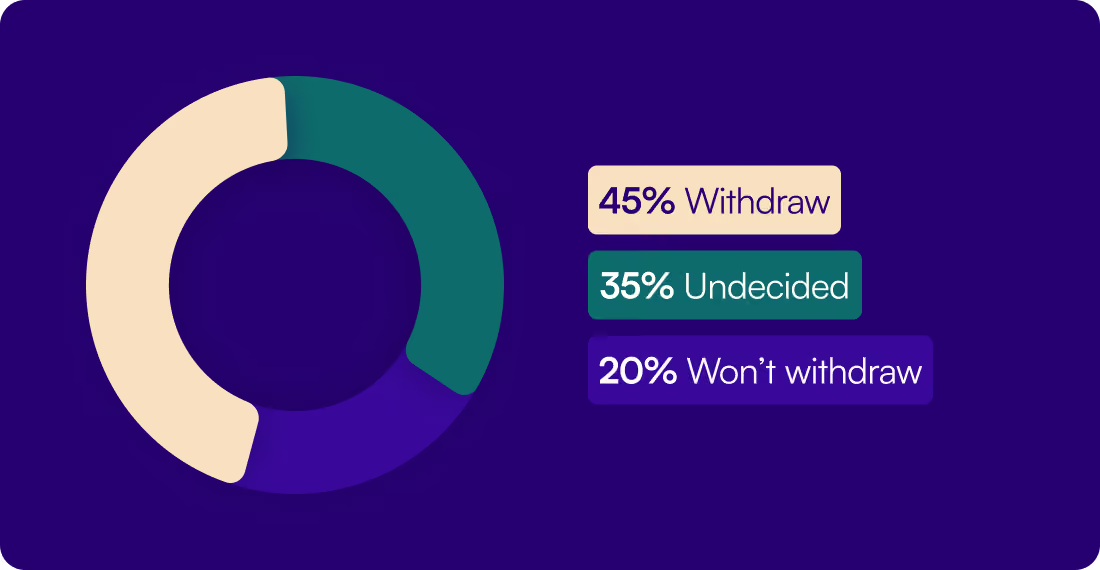
A survey by Spinter Research, commissioned by InRento, found that 45% of savers plan to withdraw, with another 35% still undecided. That's potentially hundreds of thousands of people with fresh cash arriving in regular waves over the next two years.
And it's not just Lithuanian merchants who stand to benefit. The Baltics are increasingly one interconnected ecommerce market – cross-border parcel flows from Lithuania to Latvia and Estonia already topped 600,000 shipments in 2024, according to Mordor Intelligence. Estonian and Latvian merchants are well-positioned to capture a share of the wave, too.
What should you do now
When people are in a buying mood, friction kills sales. A slow checkout, an unfamiliar payment method, or a clunky mobile experience can cost you a sale that was basically already made.
Estonia showed us that when pension money moves, average order values go up — meaning customers are making bigger, more considered purchases. When baskets are bigger, a lost sale costs more.
If you already have bank and card payments covered, now is a good time to think about Pay Later. Bigger baskets change the psychology of checkout — a customer looking at a €300 order is more likely to complete it if they can split it into three. That's not a hesitancy signal, it's just how people prefer to manage larger amounts.
Take a look at your checkout experience today. Are you offering the payment methods your customers actually trust and expect? Is the flow smooth on mobile? Are there unnecessary steps between "add to cart" and "order confirmed"?
If the answer to any of those is uncertain, now's the right time to sort it – before the spending picks up. Sign up to offer your customers a smooth checkout that’s ready when the money lands, or talk to us to learn more about building a checkout that converts.