The payment layer hotel managers never have to think about
There's a version of hospitality tech where every system does its own thing. Bookings in one place, payments in another, accounting somewhere else, and a staff member manually cross-referencing all three at the end of each day to check nothing's missing.
Most hotel operators know this version well. Many still live in it.
The alternative – where the right tools connect cleanly and the payment layer just disappears into the background – is what BOUK, the hotel management platform built by ED Hotels, has been quietly delivering for hospitality businesses across the Baltics.
Montonio is part of that stack. And in a good integration, you barely notice the individual parts – which is exactly the point.
How it works in practice
BOUK is a property management system that handles accommodation booking, front desk operations, and revenue management for hotels and guesthouses. It integrates with a range of tools that hospitality businesses already use or need: CompuCash for point-of-sale, Jumis by Visma for accounting, and Montonio for payments.

When a guest books online and pays a deposit or prepayment, Montonio handles all the transaction, whether the customers choose bank payments, cards, or mobile wallets. Once the payment clears, BOUK automatically updates the booking status to paid. After checkout, the relevant data passes directly to the accounting system. Funds land in the hotel's account the next morning.
No one logs into the bank to chase down a transfer. No one manually reconciles a payment against a reservation. It just happens.
A working example from Latvia
OTTO Hotel & Sun is a small hotel in Pāvilosta, on Latvia's Baltic coast – a quiet seaside town where guests come to slow down. The hotel runs on BOUK, with CompuCash managing food and beverage sales in the restaurant, Jumis handling the accounts, and Montonio processing online payments.
The result is an operation where all the financial data moves automatically between systems. Restaurant charges get posted directly to the correct room bill. Payments trigger booking status updates without manual input. Accounting entries land in Jumis without anyone having to push them there.

For a small team running a seasonal property, that kind of automation isn't just a nice-to-have. It's what keeps operations manageable.
It's a setup that other properties in the region are finding equally straightforward. Reute Guesthouse described their experience with BOUK and its integrations this way:
Our experience with BOUK and its integrations – including Booking, Montonio, and Valnes – has been very positive. Every time we have a question or uncertainty, we get help quickly. Communication is always friendly and cheerful, and we feel that solutions are found for our questions. This gives us confidence and makes adopting a new system much easier.
– Reute Guesthouse
Why invisible payments are good payments
The best infrastructure is the kind that stops being a topic of conversation. When payments work as they should – every bank supported, every transaction automatically matched to the right booking, funds settled overnight – there's nothing to discuss. Staff get on with running the property. Guests pay in whatever way is most convenient for them. The money arrives.
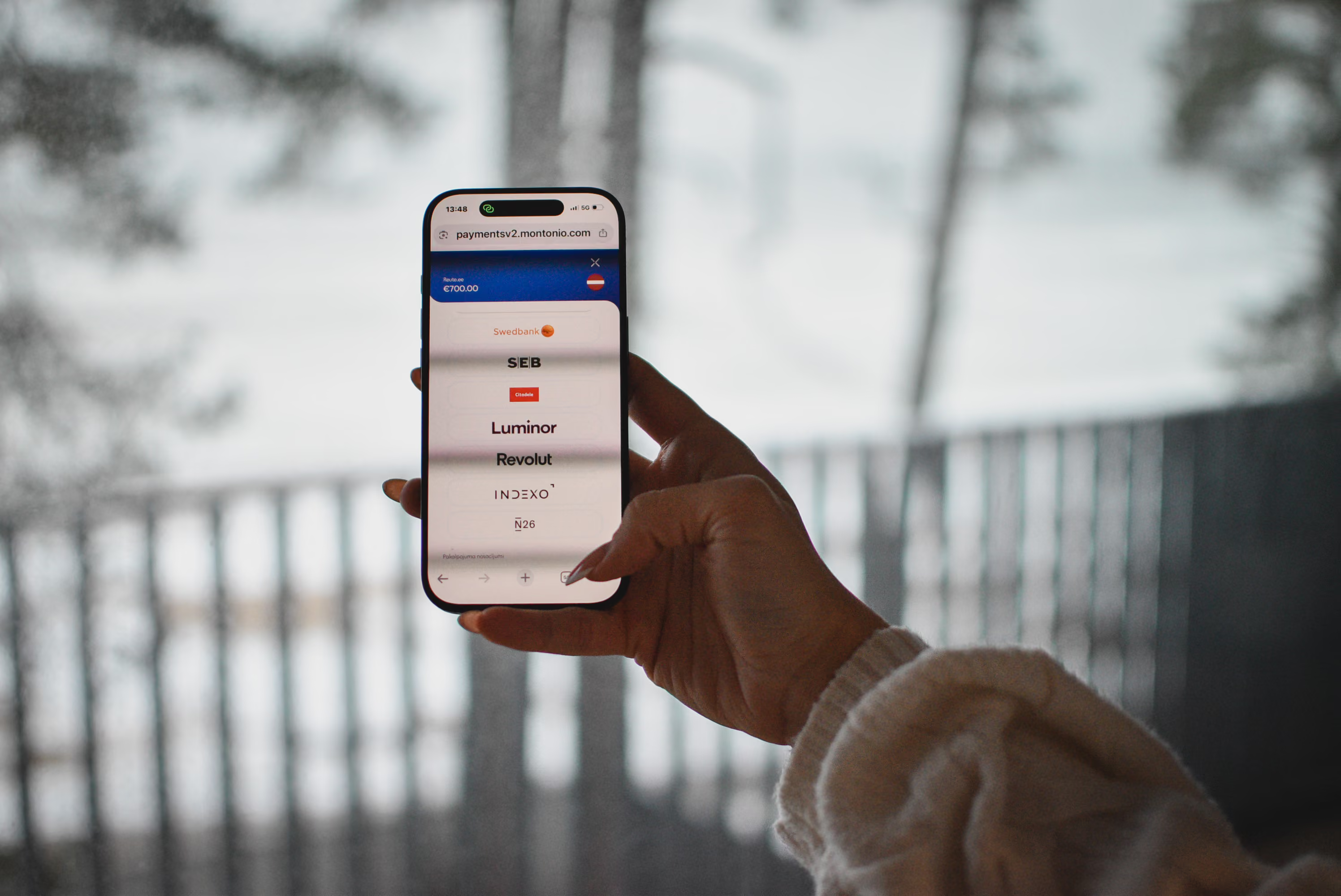
For hotels across the Baltics, where bank payments are how most guests prefer to pay, having that infrastructure already embedded in their property management platform is a straightforward win. No separate payment provider contract, no integration project, no staff training. It's just part of the setup – and it stays out of the way.
If you're running a hotel or a guesthouse and want to see what a properly connected setup that lets you run most of the operations on autopilot looks like, check out BOUK here.