Write an ecommerce return policy that builds buyer trust
An ecommerce return policy acts as a powerful conversion tool that can directly influence whether a shopper completes a purchase. Research indicates that 82% of shoppers say easy returns influence their decision to buy from a new brand, while 97% are likely to return to a store after a positive return experience according to industry data from Route. By clarifying your terms upfront, you remove the perceived risk of a transaction and foster long-term loyalty.
Why return policies drive revenue
While returns involve logistical costs and administrative effort, a return policy can make or break your online store. Many merchants view returns as a drain on profit, but failing to provide a clear path for returns often results in higher customer acquisition costs. Shoppers are naturally hesitant to commit to unfamiliar brands without a safety net that protects their money.
Processing returns – including shipping, inspections, and restocking – is undeniably expensive. However, the cost of a lost customer is often significantly higher. A frictionless return process encourages "bracket shopping," where customers purchase multiple sizes or colours with the intention of keeping one. This behaviour leads to higher initial order values and increases the probability of a successful sale.

Core elements of a transparent policy
To reduce confusion and avoid common ecommerce mistakes, your policy must use simple language rather than legal jargon. It should answer four primary questions for the shopper:
- Timeframe: Number of days allowed to initiate a return, such as 14 or 30 days
- Condition: Specific requirements for the item, such as original tags or unused status
- Refund method: Options for a full refund, store credit, or direct exchanges
- Return costs: Clarification on who pays for shipping and any potential restocking fees
Defining the return window
In the Baltics, Finland, and Poland, consumer protection laws mandate a minimum 14-day "cooling off" period for online purchases. You should include this in your store requirements checklist to ensure legal compliance. Interestingly, extending this window to 30 or 60 days can actually reduce return rates. When customers do not feel rushed to make a decision, they have more time to grow accustomed to the product, which often leads to them keeping it.
Improving visibility and user experience
Visibility is a primary driver of trust. According to the Baymard Institute, 20% of ecommerce sites fail to provide direct links to return and shipping information in the footer. If shoppers have to search for your policy, they may assume your terms are restrictive or deliberately hidden.
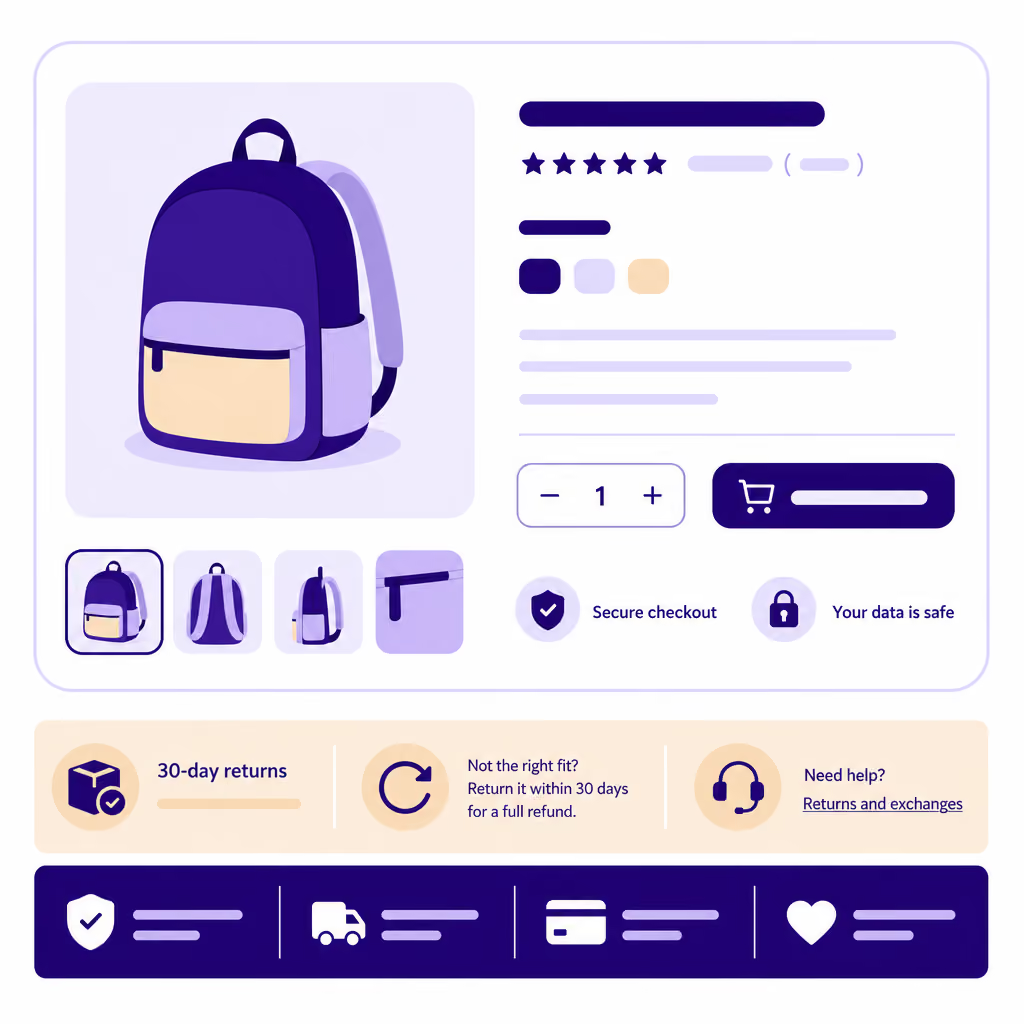
To optimise your policy's accessibility:
- Include a "Returns & Exchanges" link in your site-wide footer.
- Place a brief summary of return terms on product pages near the purchase button.
- Provide a self-service portal to avoid the 54% of sites that suffer from substantial UX issues in their return interfaces.
A structured policy gives customers the confidence to purchase, knowing that any issues with fit or quality will be resolved without friction.
Streamlining return logistics
Managing the physical return is often the most complex operational hurdle for a growing merchant. To keep your business efficient, you need a system that integrates ecommerce shipping label management and tracking into your existing workflow.
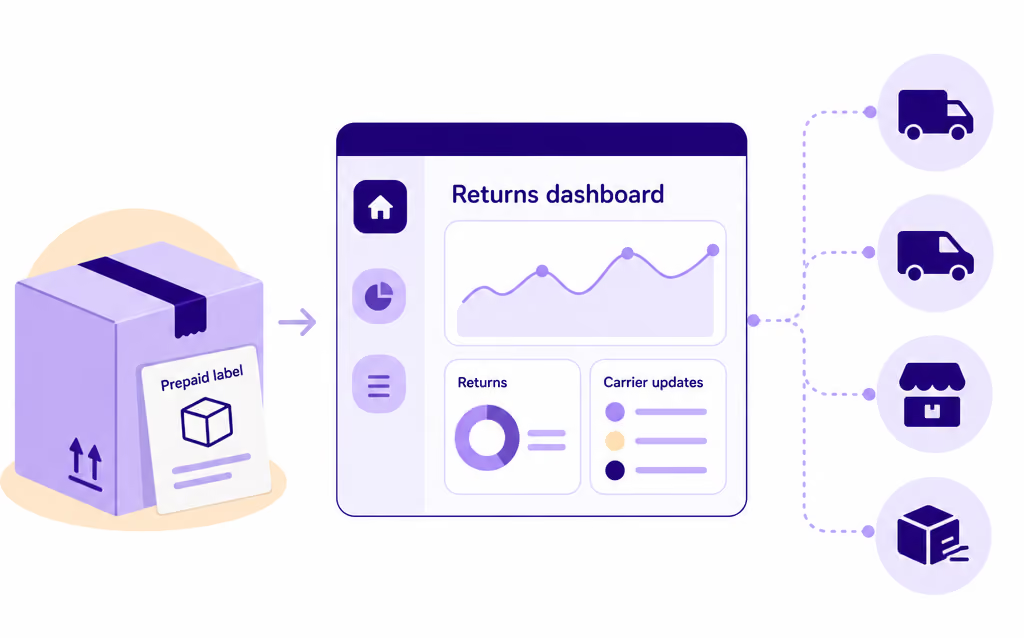
Providing a pre-paid or easy-to-print label improves the customer experience significantly. Merchants using Montonio Shipping can manage labels across multiple carriers through one dashboard, eliminating the need to navigate various carrier portals.
Offering in-store returns
If you operate physical retail locations in Poland or the Baltics, you should promote in-store returns alongside mail options. This is often more convenient for the customer and allows your staff to suggest an immediate exchange, which can preserve the revenue from the initial sale while saving on shipping costs.
Balancing costs and customer satisfaction
Deciding who covers return shipping is a strategic choice. While "free returns" are a powerful marketing tool, they are not always sustainable for every business model. Understanding your shipping costs is vital before finalising your policy.
You might consider these alternatives to universal free returns:
- Offer free shipping only if the customer chooses an exchange or store credit.
- Provide free returns as a benefit for repeat customers or loyalty programme members.
- Offer free returns only for orders that exceed a specific price threshold.
To maintain transparency throughout the process, use shipping tracking to notify customers when you receive their return and when the refund is processed. This proactive communication reduces the volume of support enquiries and builds further trust.
Modernise your return process
A return policy should be a living document that evolves as your business grows. By making your terms clear, easy to find, and supported by reliable logistics, you turn a potential point of friction into a competitive advantage that drives repeat business.
If you are ready to simplify your workflow, Montonio provides the tools to manage labels and track parcels across the Baltics, Finland, and Poland from a single platform.
Explore how Montonio Shipping can streamline your ecommerce operations